REVIEW · SINGAPORE
The Meltdown Menace- Ransack Puzzle Hunt
Book on Viator →Operated by Ransack Puzzle Hunt (Gamification Consultants) · Bookable on Viator
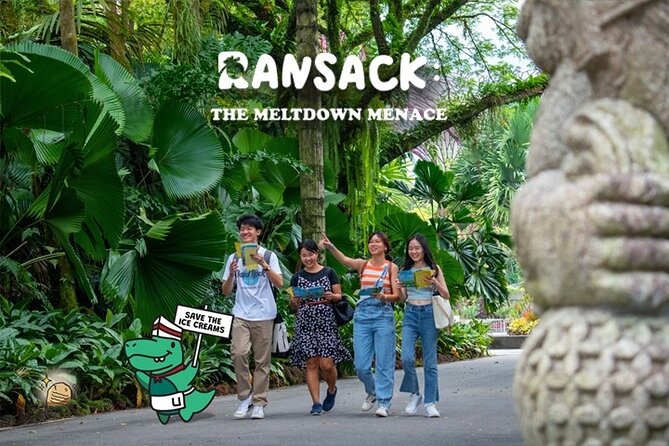
Ice cream is under threat—and you’re part of it. This Marina Bay puzzle hunt turns the area’s landmarks into clues, with a story about restoring the perfect weather for Pepper the ice cream seller.
I like that it’s a real sightseeing route with actual places to look at, not just sitting with a worksheet. I also love the puzzle quality, which feels clever and sometimes tougher than you’d expect in a family-friendly activity.
One thing to plan for: it requires good weather, since you’ll be out moving around for about 2 hours.
In This Review
- Key points to know before you go
- Turning Marina Bay Landmarks Into Puzzle Clues
- Bayfront MRT Start: Simple, Central, Easy to Access
- Marina Bay Sands Stations: Architecture You Actually Have to Look At
- Gardens by the Bay Tasks: Clues with a Sustainability Theme
- How the Puzzle Hunt Feels: Challenging, But Not Out of Reach
- The Finale Prize: Why Finishing Changes the Whole Mood
- Price and Value: Getting More Than a Quick Photo Stop
- Who This Puzzle Hunt Suits Best (And Who Might Skip It)
- Should You Book the Meltdown Menace Puzzle Hunt?
- FAQ
- Where do I meet for the Meltdown Menace puzzle hunt?
- How long does the activity take?
- Is the ticket mobile?
- How many people are in a group?
- Is it suitable for families and kids?
- What if the weather is bad?
Key points to know before you go
- Marina Bay Sands + Gardens by the Bay in one 2-hour game instead of a standard walk
- Environment-based puzzles that use what you see around you as part of the solutions
- A story-driven mission with global warming and ice cream weather as the theme
- Hints are available through the facilitator if you hit a wall
- Small-group feel, with a maximum of 20 travelers
- An end prize for completing the quest
Turning Marina Bay Landmarks Into Puzzle Clues
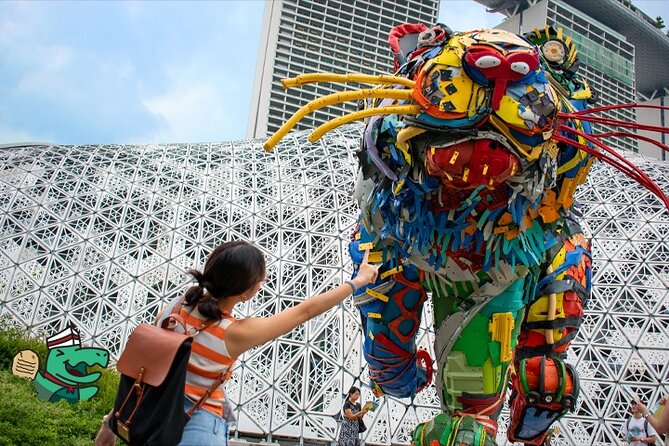
This puzzle hunt is built for people who want to see Marina Bay but also want their brain turned on. You’re joining Pepper, an ice cream seller with a mission: help fix the weather so ice creams can stay safe. The plot uses global warming as the starting point, then sends you looking for ancient tablets hidden around Marina Bay.
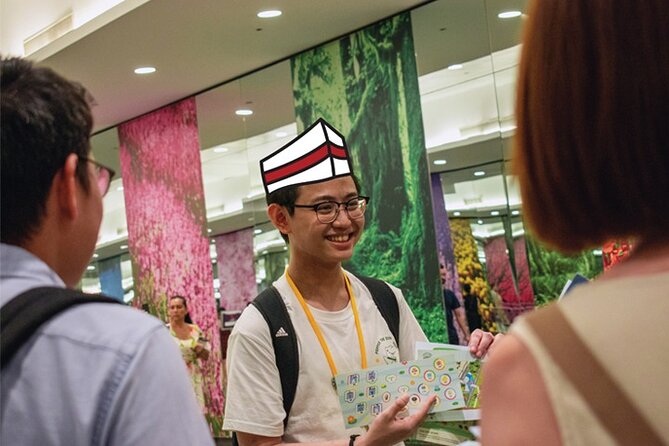
What makes it work well for visitors is that the “game” is tied to the places you’re already curious about. Instead of only taking photos, you’re scanning details, matching hints to locations, and figuring out next steps. It’s also why it feels good for families: kids are busy, adults aren’t bored, and everyone has a job.
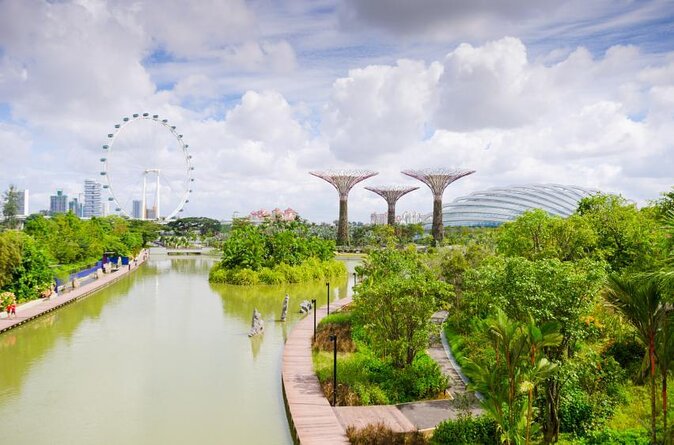
You’ll be walking around the Marina Bay Sands area and Gardens by the Bay during the hunt. The fun part is that these stops aren’t treated like a backdrop. They become part of the puzzle design, so you’re encouraged to notice architecture, built details, and the surrounding features as you go.
You can also read our reviews of more tours and experiences in Singapore.

Bayfront MRT Start: Simple, Central, Easy to Access

You meet at Bayfront MRT Station (CE1/DT16) at Bayfront Ave. The end point is the same meeting place, so you’re not guessing your way back across the area.
The activity uses a mobile ticket, which keeps things easy once you arrive. You’ll also get confirmation at the time of booking, so you can plan without last-minute uncertainty.
Group size is another practical plus. With a maximum of 20 travelers, it doesn’t feel like a giant crowd event. It’s large enough that you can still enjoy the shared energy of a group hunt, but small enough that a facilitator can keep an eye on multiple teams and offer help when needed.
Facilitators matter a lot in puzzle hunts, and the experience is set up for interaction. One facilitator named Desmond is described as super friendly, helpful, and engaging—exactly the kind of energy that makes hints feel like coaching, not rescue.
Marina Bay Sands Stations: Architecture You Actually Have to Look At
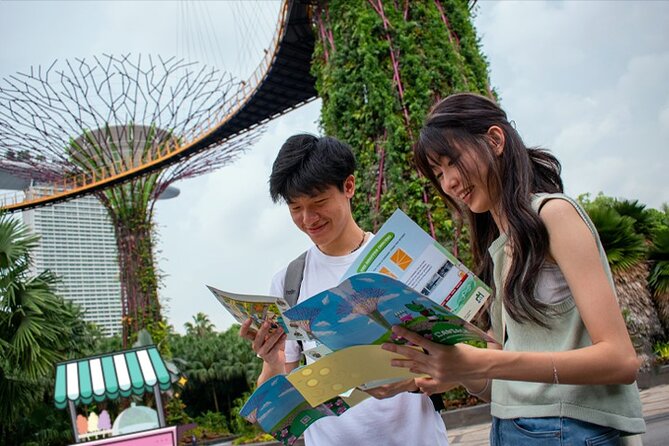
A big part of the hunt takes place around different parts of Marina Bay Sands. The game uses that complex area in a clever way: you’re led to landmarks and then asked to solve puzzles that connect to what’s around you.
In practical terms, this means your time doesn’t vanish into random wandering. You’ll have a reason to move from spot to spot, and each stop gives you another piece of the story. One of the strongest themes from people who completed the hunt is that the puzzles are built to make you use the environment. If you’ve ever been to a place and felt like you were only skimming the surface, this format forces a slower, more observant kind of sightseeing.
You can also expect a mix of puzzle styles. Some challenges are more straightforward, while others demand more creativity. Even experienced escape room players can still have fun here, because the clues aren’t limited to typical lock-and-key mechanics. They’re tied to the setting and the narrative about restoring weather for ice cream.
The trade-off is that you’ll be using your eyes and your thinking at the same time. If you’re the type who likes a relaxed walk with minimal mental work, you might find the pacing a little more active than expected. But if you enjoy solving, it’s a great fit.
Gardens by the Bay Tasks: Clues with a Sustainability Theme
After the Marina Bay Sands portion, the hunt shifts toward Gardens by the Bay. The Gardens area is a natural match for this kind of game because there’s so much to notice—structures, plants, and design details that can spark visual clues.
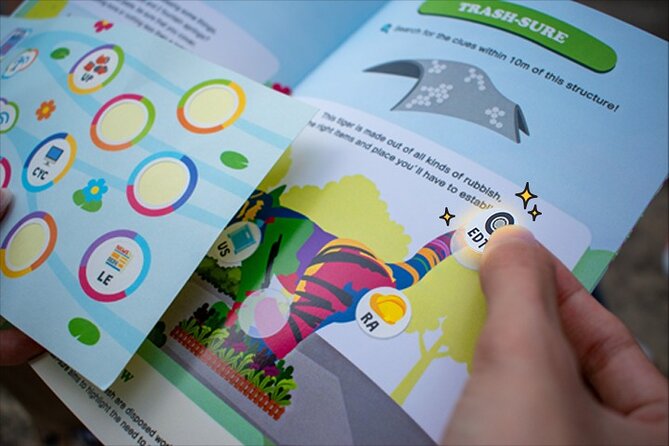
The story doesn’t stay purely entertainment-focused. You’ll also pick up sustainability-related content as part of the experience. People describe learning about recycling and sustainability through the hunt’s stations, with interesting facts tied to landmarks along the route.
This is one of those “edutainment” formats that can work if it doesn’t feel preachy. Here, the learning is embedded in the tasks: you’re gathering information and using it to move forward. That’s the difference between reading facts and actually remembering them.
In other words, the Gardens leg gives you a chance to balance the mind-work with a change in scenery. If Marina Bay Sands is the “city and steel” mood, Gardens by the Bay offers a more playful environment. The game uses that contrast well so the hunt doesn’t feel monotonous.
One practical note: because it’s outdoors, your comfort will depend on the day’s conditions. If you visit on a hotter or rainier day, it can change the experience. Since the activity requires good weather, it’s worth choosing a time when you’re confident the rain won’t disrupt the route.
How the Puzzle Hunt Feels: Challenging, But Not Out of Reach
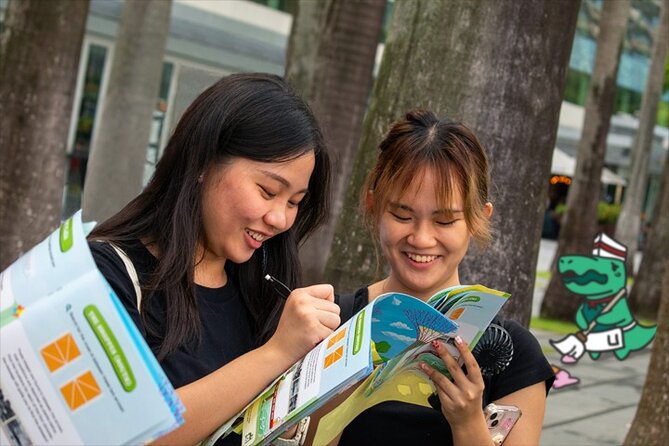
The overall tone of the puzzle hunt is fun-first, brain-on. People describe the puzzles as surprisingly challenging and well thought through, with a difficulty level that stimulates thinking without pushing you into frustration.
It’s not a one-note difficulty either. Some riddles are tougher than others, which is what you’d want for a mixed group of adults and kids. You’re not guaranteed an even experience at every station, but that variation keeps the hunt from feeling too easy or too repetitive.
Hints are part of the design. If your team is stuck, the facilitator can help you keep moving. That matters because it preserves the flow of the story. You still feel like you solved the puzzle, but you’re not stuck staring at one clue for too long.
Also, the activity is timed around a two-hour window. People often say the duration is just right—long enough to feel like a real hunt, but short enough that you don’t lose momentum. In a city where you might otherwise plan a half day of “see stuff and move on,” this gives your sightseeing structure and purpose.
And yes, you will likely get a bit of a workout. Some people describe it like a sweat-inducing team activity. You’re moving between spots, and the mental effort makes the time feel faster in a good way.
The Finale Prize: Why Finishing Changes the Whole Mood
The hunt doesn’t end with the last clue. There’s an exhilarating finale and an exclusive prize for participants who complete the quests.
That “finish line” matters for two reasons. First, it gives the story stakes. Pepper’s mission feels like it has an outcome, not just random puzzle stations. Second, the prize creates a shared moment that you can look forward to—especially for kids, or for groups doing something like team bonding.
Even when teams don’t all finish at the same time, the hunt still feels like a game with a clear end. Completing it is part of the satisfaction. You’ll leave with that sense of accomplishment that you only get when the last piece clicks.
Price and Value: Getting More Than a Quick Photo Stop
The price is $23.90 per person for about 2 hours, and it includes a mobile ticket, a guided puzzle hunt, and the promised prize at the end.
For value, look at what you get for that money:
- You’re not paying just for entry into sights; you’re paying for a structured game that turns Marina Bay Sands and Gardens by the Bay into interactive stations.
- You get a narrative experience built around solving, not just walking.
- You’re not doing this alone in a vacuum; there’s a facilitator and hint support.
Also, the booking pattern suggests it’s a popular activity—on average it’s booked about 16 days in advance. That’s usually a sign people are finding it an efficient way to experience a famous area without sacrificing time to planning.
Is it free-form sightseeing? No. The trade-off for the structure is that you’ll be thinking and moving. But if you want a “do something” plan that still delivers landmark sightseeing, the price-to-experience ratio looks strong.
Who This Puzzle Hunt Suits Best (And Who Might Skip It)
This is a standout choice if you’re traveling with kids, because the game format keeps attention locked in. It’s also great for couples, especially if you enjoy working together and seeing who spots details faster. People also describe it as a fun couple activity to compare problem-solving styles.
If you’re traveling with a group—like colleagues—it can be a very effective bonding activity. One of the nicest parts is that it creates roles naturally: one person reads clues closely, another tries patterns, and another focuses on where you are physically. People describe it as a great team bonding experience for companies looking for something different.
It’s also a good option for adults who don’t want an indoor-only activity. You get fresh air, iconic views, and the chance to explore areas you might not stop at during a normal tourist route.
You might want a different plan if you know you dislike puzzles or hate being outdoors in changing conditions. Since the experience requires good weather, rain or poor weather can affect whether you go as scheduled.
Should You Book the Meltdown Menace Puzzle Hunt?
If you want a short, high-energy way to explore Marina Bay, I’d book this. It’s one of those rare activities that mixes the best parts of sightseeing—places you can photograph and talk about—with an actual challenge that gives you a reason to notice details.
I’d especially choose it if:
- you’re bringing kids and want them engaged
- you enjoy puzzles, scavenger hunts, or team challenges
- you want a structured route around Marina Bay Sands and Gardens by the Bay
- you’d rather do something interactive than just stroll
Before you go, be honest about one thing: you need decent weather to enjoy it smoothly. If forecasts look sketchy, plan to be flexible.
FAQ
Where do I meet for the Meltdown Menace puzzle hunt?
You start at Bayfront MRT Station (CE1/DT16), Bayfront Ave, #B1-02, Singapore 018957, and the activity ends back at the same meeting point.
How long does the activity take?
The puzzle hunt lasts about 2 hours.
Is the ticket mobile?
Yes, you’ll receive a mobile ticket.
How many people are in a group?
The tour has a maximum of 20 travelers.
Is it suitable for families and kids?
Most travelers can participate, and the hunt is described as highly suitable for children, couples, and families.
What if the weather is bad?
The experience requires good weather. If it’s canceled due to poor weather, you’ll be offered a different date or a full refund.