
REVIEW · WASHINGTON DC
The Escape Game DC: 60-Minute Adventure in Georgetown
Book on Viator →Operated by The Escape Game DC · Bookable on Viator
DC escape rooms turn thinking into play. This Escape Game DC session in Georgetown mixes story-driven missions with real teamwork, run by a guide who keeps the game moving, not just watching from the sidelines. I like the fact that it is designed for fun collaboration instead of jump-scares or darkness, so it feels friendly even if you are not a puzzle wizard.
Two things I really liked: the choice of themed scenarios (from Pirate to Titanic) and the way the room setup stays manageable with a 10-player max. A possible drawback is that the clues can feel tricky if your group likes easy wins, so go in ready to communicate and ask for help when you need it.
In This Review
- Key Highlights at a Glance
- Georgetown Escape Game DC: What This Washington DC Escape Room Really Delivers
- Choosing Your Mission: Pirate, Mummy, Titanic, and More
- Small Teams, Big Momentum: The Guide, the Group Limit, and the Exit Button
- Your Real Itinerary: Briefing, the Locked-Room Mission, and the Debrief + Photos
- What Solving Feels Like: Clues, Communication, and That Moment You Almost Escape
- Which Scenario Should You Pick?
- Price and Value: Is $38.15 Worth It?
- Timing and Location: How to Plan Your Day in Georgetown
- Who Should Book This Escape Game DC Session?
- Should You Book Escape Game DC in Georgetown?
- FAQ
- How long is the Escape Game DC Georgetown experience?
- What games can I choose from?
- Is the escape room scary or dark?
- Can I leave the room if I want to?
- What is the age recommendation and do adults need to participate?
- Is there a way to get a refund if plans change?
Key Highlights at a Glance

- Choose your mission theme: six game options, with some running about 45 minutes and others about an hour
- Not scary, not dark: adventure vibes first, creepy vibes nowhere
- Small group size: a maximum of 10 players makes it easier to stay involved
- Guide support: a dedicated game guide helps when you are stuck
- Room has an exit button: you can leave if you want, even though doors are locked
- Brief + play + debrief: about 15 minutes to prep, then time for photos and debrief after
Georgetown Escape Game DC: What This Washington DC Escape Room Really Delivers
If you want a Washington DC activity that is active, social, and different from sightseeing, this is a strong pick. The Escape Game DC experience is built around one simple goal: your team works through clues and puzzles to complete a mission and escape before time runs out. It is not about being the smartest person in the room. It is about how well you share ideas, spot details, and keep the energy up.
The “escape room” part is straightforward: you and your group are placed in a themed room with locked doors. Still, it is designed with comfort in mind. The rooms are not scary or dark, and there is an exit button on each door if you decide you want to leave. That detail matters, especially if you are traveling with teens, kids, or anyone who gets anxious in tense settings.
And then there is the Georgetown factor. This game starts at 3345 M St NW in Washington, DC, so it is easy to pair with other neighborhood time. You can plan it as a standalone activity after dinner, or add it before you go exploring. The experience also runs in English and uses a mobile ticket, so your day stays pretty low-fuss.
You can also read our reviews of more tours and experiences in Washington DC.



Choosing Your Mission: Pirate, Mummy, Titanic, and More
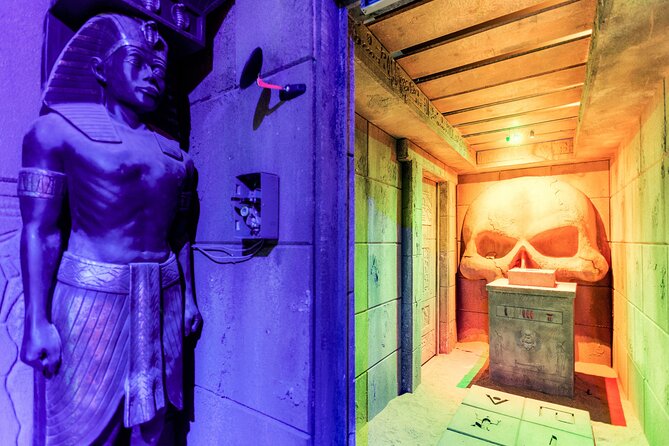
One of the smartest parts of this Escape Game DC setup is that you get to pick your theme. You are choosing from six named adventures, and the format lets you match your mood to the game:
- A Pirate’s Adventure (60 minutes): break the curse
- The Curse of the Mummy (60 minutes): escape the tomb
- Dr. Whack’s Elixer of Life (60 minutes): retrieve the secret
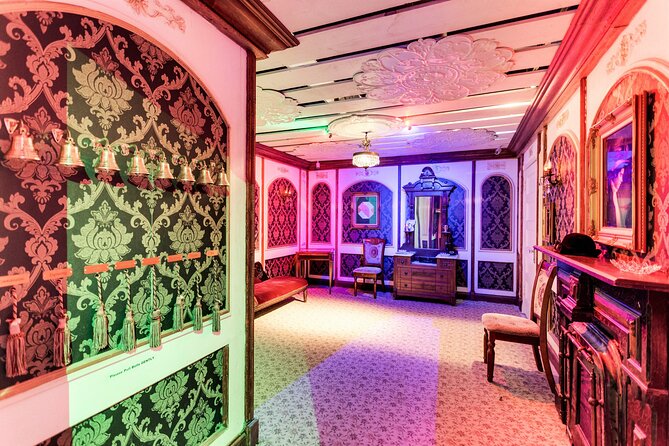
- Titanic (45 minutes): save yourself and your team
- The Cabin (45 minutes): get inside the cabin
- The Depths (duration described as around an hour for the main set): uncover the lab’s secrets
Here’s the practical reason this matters: time and difficulty tend to feel different depending on the theme. For example, Titanic is described as one of the more difficult escapes. If your group is new to escape rooms, you might still have a great time choosing it, but you should know you may spend more effort before you feel confident you are getting traction.
Also, the themes are not just costumes. Each game is built around a narrative mission that gives clues a reason to exist. That story structure helps many groups stay focused. Instead of feeling like random puzzles, you feel like you are progressing toward an objective.
Small Teams, Big Momentum: The Guide, the Group Limit, and the Exit Button

The format is designed to keep you actively participating. There is a maximum of 10 travelers, which is a sweet spot: big enough to brainstorm as a team, small enough that you are not stuck watching other people do all the work.
When you arrive, you meet a dedicated game guide. Their job is not just to explain rules and disappear. They help as needed, so you do not feel totally lost if a clue is unclear or the team hits a wall. In the best situations, a good guide helps you correct course quickly, without taking over the game.
Two guide names show up in people’s experiences: Star and Matt. That is a useful hint about the tone you can expect. Star is described as having a great energy, and Matt is praised as a strong guide who can even coach you through tougher moments like Titanic.
Now, about comfort and control. Yes, you will be locked in a room. But every door has an exit button, and you can leave the room at any time if you need to. That turns the experience from stressful to manageable, especially if you have someone in your party who might panic during tense moments.
Your Real Itinerary: Briefing, the Locked-Room Mission, and the Debrief + Photos
This experience is about 1 hour 15 minutes total, including the parts before and after the main game. Here’s the timing that shapes the whole vibe:
1) Arrival and pre-game briefing (about 15 minutes)
You get set up and understand the mission. This matters because escape rooms live or die on communication. The briefing helps you start with the right mindset: call out what you see, share theories fast, and avoid everyone working in silence.
2) The mission (around 45 to 60 minutes depending on the game)
This is where you solve puzzles and find clues. The room is designed for time pressure, but it is not designed to be scary. Expect intense problem-solving and frequent “wait, look at this” moments.
3) Debrief and photos (about 15 minutes after)
Once time is up, you get a chance to talk through what happened and snap photos. That debrief is not filler. It often turns the experience into a story you can share later, even if you did not escape.
4) Return to the meeting point
The experience ends back at the starting location.
One important practical note: unless you book all the spots in your chosen game, your session may become a shared experience. That means other people could join your team. For some groups, that is totally fine. For others (family groups that want privacy, friend groups celebrating a birthday), you may want to book early and choose a game date/time that lets you secure all spots in your session.
What Solving Feels Like: Clues, Communication, and That Moment You Almost Escape
Escape games reward behavior more than raw intelligence. You win (or learn fast) when you split tasks naturally. One person handles the obvious clues while another checks details that others walk past. You also want quick check-ins: what did we think this meant, and what new evidence do we have?
A point worth emphasizing: even in a friendly, not-scary room, the puzzles can be challenging. Some people found the clues not that easy to spot at first, and they say a kid or teen might catch patterns faster. That does not mean adults cannot succeed. It just means you should plan to communicate and keep trying rather than assuming you are stuck after the first few minutes.
Also, time perception is real. In a game like Titanic (often described as difficult), you might feel like you are making progress, then suddenly realize you are racing the clock. That’s where asking for help from the guide can feel like a smart move. You are still solving. You are just getting nudged when your team is missing a key connection.
The winning formula looks like this:
- call out clues immediately
- assign roles (searcher, reader, note-taker)
- test ideas out loud, even if you are not sure
- be ready for the guide to redirect you

Which Scenario Should You Pick?
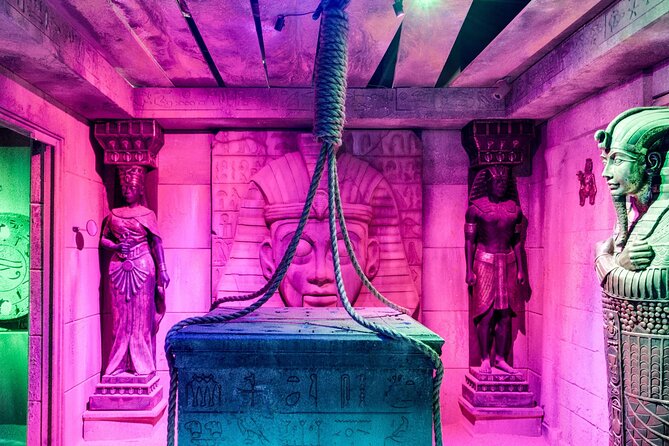
If you are deciding between themes, think about your team and your tolerance for difficulty.
For first-timers or lighter pressure: you may prefer a 45-minute option like Titanic or The Cabin. Titanic is still described as difficult, but the shorter format can keep the energy tight. The Cabin can feel more straightforward for groups that want momentum.
For adventure-forward full hour missions: the 60-minute games include Pirate’s Adventure, Curse of the Mummy, and Dr. Whack’s Elixer of Life. These are ideal if your group likes longer sessions and you want more time to work puzzles without the stress of a faster clock.
For groups that want a secret-lab vibe: The Depths leans into discovery. It can be a good match if your team enjoys piecing together information and working through “what is going on here” logic.
If you are celebrating something, choose the theme that your group already talks about. A birthday group often does best when the story feels fun on day one, because you will spend your energy on solving instead of deciding what kind of mission you even wanted.
Price and Value: Is $38.15 Worth It?
At $38.15 per person, this is not the cheapest DC activity, but it can be good value for what you get: a guided, time-limited problem-solving experience in a small group, with a themed room built to keep you engaged.
Here is how I think about the value:
- You get one full admission to one adventure, not just a short peek.
- You get a dedicated guide to keep things flowing.
- You get the full session structure: briefing, play, and then debrief and photos.
- You get a small group cap, which tends to improve participation and reduces the odds someone fades into the background.
Cost sensitivity depends on your travel style. If you are a family of four, the total is real money. Still, if you want one activity that feels like an event (not a line you wait in), this often delivers. It is also a strong option when the weather is bad, since it is indoors and scheduled.
Timing and Location: How to Plan Your Day in Georgetown
This starts at 3345 M St NW and runs about 1 hour 15 minutes. No hotel pickup or drop-off is included, so you will want to plan how you arrive.
Two practical tips:
- Plan for public transportation access since it is near public transit.
- Give yourself a little buffer for finding the meeting point. Georgetown can be easy to navigate, but locating a specific address still takes a few minutes.
Because the session ends where it starts, it is easy to chain into another Georgetown stop. You can do dinner nearby, then return for the game, or reverse it: game first, then walk it off.
Who Should Book This Escape Game DC Session?
This is a great match if you want:
- a team-based activity where everyone contributes
- a challenge that is active and indoor
- an escape room that is not scary or dark
- a small group experience with guide support
It is also built for a wide range of ages. The games are recommended for ages 13 and up, but younger players are allowed if an adult participates. If anyone is 14 or under, an adult age 18 or older must participate with them. Any participant under 18 will need an adult to sign their waiver.
So who might not love it? If someone on your team hates puzzles or gets frustrated quickly under time pressure, they may need extra patience. The good news: the guide is there for help, and the rooms are not designed to frighten you.
Should You Book Escape Game DC in Georgetown?
Yes, if you want one high-energy, inside-the-city activity that feels like a shared challenge. The strongest reasons to book are the guide support, the not-scary adventure tone, and the variety of themed missions that make it easy to pick something your group will actually enjoy.
Skip it only if your group strongly prefers passive sightseeing, or if nobody in your party likes communicating and problem-solving when the clock is ticking.
If you do book, pick the theme that matches your group’s interests, arrive ready to talk, and treat the first few minutes like warm-up. Most teams don’t magically escape on the first attempt. They get better quickly once everyone starts sharing clues and building theories together.
FAQ
How long is the Escape Game DC Georgetown experience?
It lasts about 1 hour 15 minutes total. The games themselves run about 45 minutes or about 1 hour depending on the scenario, with additional time for briefing before and debrief/photos after.
What games can I choose from?
You can choose one adventure from six themed options: A Pirate’s Adventure, The Curse of the Mummy, Dr. Whack’s Elixer of Life, Titanic, The Cabin, and The Depths.
Is the escape room scary or dark?
No. These experiences are designed to avoid being too scary or dark. They focus on fun, adventurous gameplay.
Can I leave the room if I want to?
Yes. Even though you will be in a room with a locked door, each door has an exit button, and you can leave at any time.
What is the age recommendation and do adults need to participate?
Games are recommended for ages 13 and up. Younger players are allowed, but if someone is 14 or under, an adult age 18 or older must participate with them. Participants under 18 also need an adult to sign their waiver.
Is there a way to get a refund if plans change?
Yes. Cancellation is free up to 24 hours in advance for a full refund. If you cancel less than 24 hours before the start time, the amount paid is not refunded.