REVIEW · SOFIA
Sofia Under Communism: Self-Guided Puzzle Quest
Book on Viator →Operated by Questo · Bookable on Viator
There’s a reason this walk feels like a scavenger hunt with a history spine. Sofia Under Communism is a self-guided puzzle quest that uses the Questo app to send you from one landmark clue to the next across central Sofia. It’s designed for flexible pacing and small, street-level exploration instead of a rigid group tour.
What I like most is how you control the rhythm—start when you want, pause as needed, then keep going. The second big plus is the lineup: churches, government buildings, monuments, and cultural sites all appear in one continuous route, so you get a full “how a city works” picture rather than just one era.
One thing to keep in mind: some puzzle instructions may feel overly confusing or tied to details you might not see anymore, and the total walking time can run longer than the game estimates.
In This Review
- Key things to know before you play
- A 2-hour puzzle walk built around power, faith, and ideology
- What the game actually feels like: clues, prompts, and your phone as the guide
- Start at St. Nedelya Cathedral: the story opens in the Old City center
- Rotunda Church of St George: a quick clue break in a compact setting
- Presidential Palace and National Assembly: where the story shifts toward state power
- National Art Gallery and the Soviet Army Monument: culture on one side, ideology on the other
- Soviet-era cultural touchpoints: Filmoteca, Hotel Slavyanska Beseda, and K.E.B.A.
- Sofia University and a First Urban Hospital: education and everyday institutions
- Temple of Bulgarian Martyrs: the finish line for story and wandering
- Price and value: what $6.02 gets you, and what it doesn’t
- Timing, pacing, and when this walk can take longer than expected
- Accessibility, safety, and practical logistics on the ground
- Who this puzzle quest suits best (and who might not)
- Should you book Sofia Under Communism: Self-Guided Puzzle Quest?
- FAQ
- How long does Sofia Under Communism take?
- How much does it cost?
- Is there a live guide with this experience?
- What language is the experience in?
- Are admission tickets included for the attractions?
- Where does the experience start and end?
Key things to know before you play
- Questo app, not a guide: You’ll rely on your phone for clues, directions, and story prompts.
- 12 major stops, mostly outdoors: You’re moving through central Sofia with open-air pacing.
- English support: The experience is offered in English, and it’s available every day.
- Short clue beats with optional exploring: You get a clue at each stop, then you can linger.
- Price-friendly for a multi-stop game: At $6.02, it’s a low-cost way to see more of Sofia than a typical church-and-coffee loop.
A 2-hour puzzle walk built around power, faith, and ideology
Sofia Under Communism is the kind of city game that works best when you’re curious and comfortable navigating on your own. Instead of “here’s what you should look at,” you get a story thread, a clue at each location, and directions that keep you moving.
The route is also smart: it starts with an Orthodox cathedral, then moves into the symbolism-heavy zone of government and monuments. That gives you an easy way to notice how different building types can carry different messages—religion, public authority, and state ideology—without needing a lecture.
You don’t have to race, either. The format is built for you to pause, take breaks, and come back to the next clue when you’re ready.
You can also read our reviews of more tours and experiences in Sofia.
What the game actually feels like: clues, prompts, and your phone as the guide
This is a self-guided experience, so there’s no live guide to explain the story or resolve confusion. Your “tour control room” is the Questo app on your phone, which provides the clue and the next set of directions.
At each stop, you’re given about 10 minutes to handle the clue and get moving on. After that, you can explore as long as you like on your own pace—so the visit can be as quick or as slow as your energy allows.
One practical point: because the clues are central to the experience, you’ll want to keep your phone charged and your focus on reading and solving. If you like history but hate puzzle logic, it can still be enjoyable as a walking route—just expect some parts to feel more like game mechanics than straight sightseeing.
Start at St. Nedelya Cathedral: the story opens in the Old City center
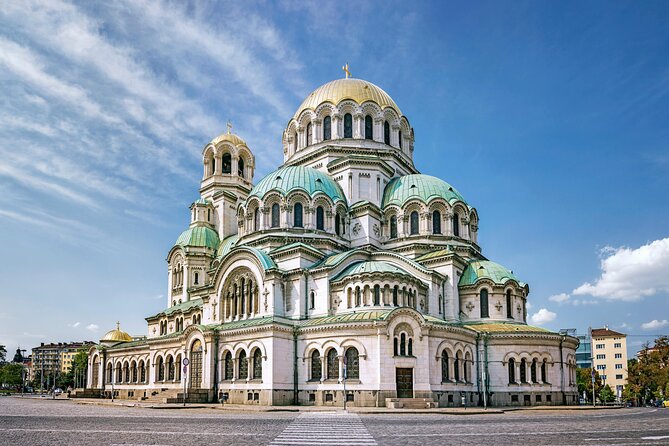
Your walk begins at Orthodox Cathedral Saint Nedelia in the Old City Center (pl. Sveta Nedelya 20). This is a strong choice for a start point because it immediately plants you in a historic core area where central Sofia feels walkable and condensed.
You’ll receive your first clue here. The game structure is simple: solve what you’re prompted to solve, and you’ll then get the next direction and story step.
What to watch for: give yourself time to look around before you rush into the puzzle. Cathedral exteriors and nearby streets can offer visual context that helps you move through clue-solving without constant guessing.
Possible drawback: if you’re trying to do this at a very hurried pace, you may end up staring at your screen more than the surroundings.
Rotunda Church of St George: a quick clue break in a compact setting
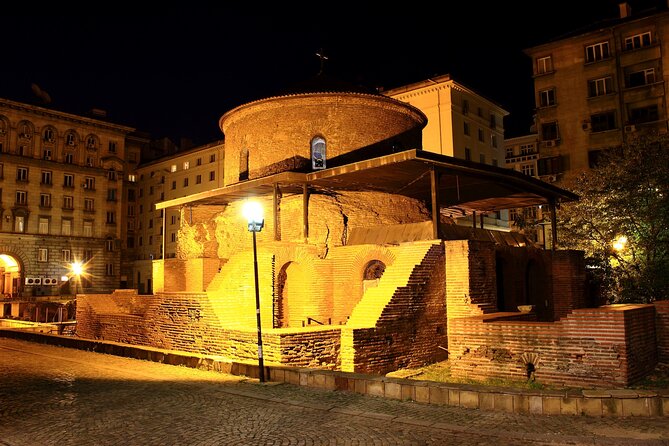
Next up is the Rotunda Church of St George. You’ll get another clue here, and you can keep exploring after you solve it.
This stop matters because it keeps the route grounded in religious architecture while you build momentum. By the time you move from church settings into civic ones, you’ll have an easier time noticing the shift in how Sofia visually communicates meaning.
If you enjoy “problem-solving with context,” this is a good stop to slow down for a few minutes. Even without going inside, the structure and setting can make the clue feel more connected to place than random question-asking.
Presidential Palace and National Assembly: where the story shifts toward state power
After the church stops, the game takes you to the Presidential Palace of the Republic of Bulgaria. From there, you’ll move to the National Assembly of the Republic of Bulgaria.
These are major landmarks, and in a puzzle quest like this, they function as more than background. They’re checkpoints where the story tone likely changes—moving from spiritual space to political space.
How it helps your visit: even if your main goal is sightseeing, these stops force you to pay attention to civic architecture and public-facing design. You’re not just passing monuments; you’re moving with a reason.
Real-world note: you’re on foot, and government-area streets can feel busy near certain hours. The experience is designed to help you avoid tight crowd situations, but timing still matters for comfort.
National Art Gallery and the Soviet Army Monument: culture on one side, ideology on the other
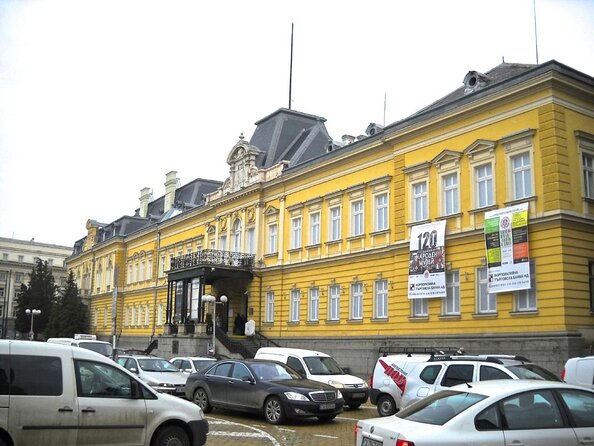
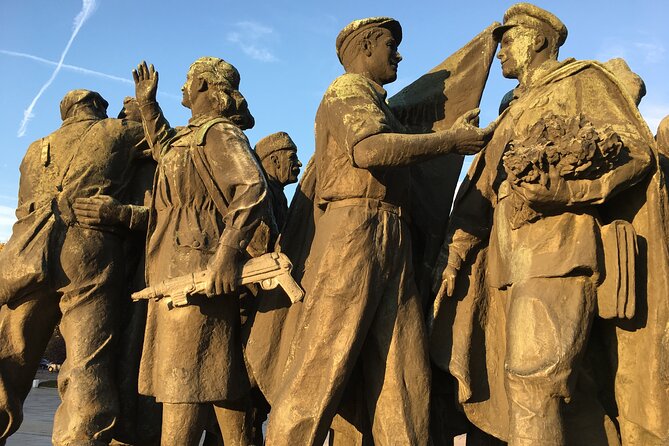
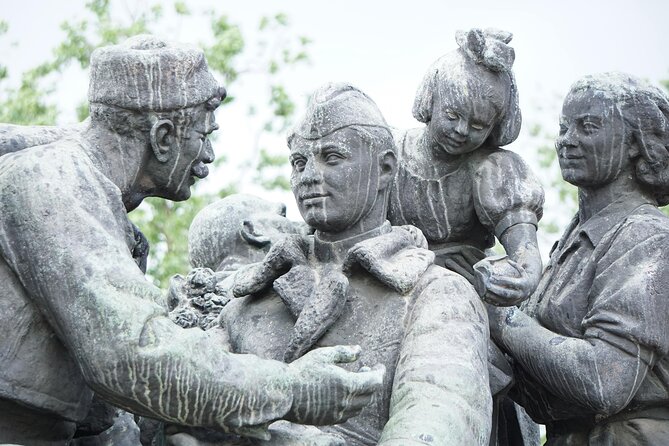
The route continues to the National Art Gallery, then to the Soviet Army Monument.
That pairing is interesting because it creates a contrast. Art museums and memorial spaces often represent different kinds of public memory—one through artistic expression, the other through commemorative symbolism. The game’s puzzle prompts are the connective tissue that keeps you from treating them as two unrelated stops.
If you like “seeing the city through themes,” this is where you’ll probably feel the strongest payoff. The walk isn’t just a list of sights; it’s a structured attempt to connect places that shaped (and still reflect) Bulgaria’s 20th-century story.
Soviet-era cultural touchpoints: Filmoteca, Hotel Slavyanska Beseda, and K.E.B.A.
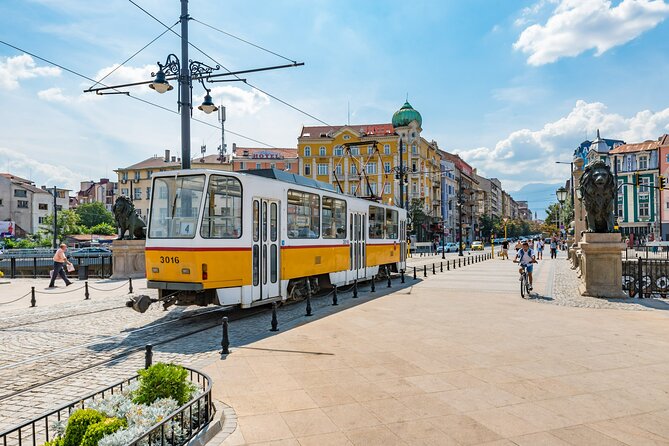
Next, you’ll visit Balgarska Natsionalna Filmoteka and Hotel Slavyanska Beseda, then move onward to K.E.B.A.
This is the part of the route where it starts to feel less like a standard tourist checklist. Film history and film archives can be a big part of how any era spreads ideas, and hotels can act like social hubs that show how ordinary life coexisted with official narratives.
The same goes for K.E.B.A.—even if you don’t know much about it beforehand, the game format turns it into an intentional stop rather than a random building you pass on your way somewhere else.
Sofia University and a First Urban Hospital: education and everyday institutions
The walk includes Sofia University St. Kliment Ohridski and Университетска Първа МБАЛ – София (First Urban Hospital).
These stops add two “ordinary life” anchors to a route that otherwise includes big political and symbolic landmarks. Education and healthcare aren’t as visually dramatic as palaces or monuments, but they’re essential to understanding how societies function day to day.
Why it’s valuable: many history walks focus on power only. This one spreads the theme into institutions that people experienced directly—whether they were students, patients, staff, or visitors.
If you like getting a sense of how a city’s systems lived in real life, these two stops are a good reason to play all the way through.
Temple of Bulgarian Martyrs: the finish line for story and wandering
You’ll end at the Temple of Bulgarian Martyrs (Ndk, 1463 Sofia). This is where both the story and the city exploration game end.
Finishing at a temple makes the closing feel cohesive—coming full circle from religious architecture at the start. It’s also a practical end point because it sits in the same general central Sofia zone, so you’re not left stranded far from onward transport.
After you reach the final clue, you can keep exploring the neighborhood on your own. Just know the game portion ends here.
Price and value: what $6.02 gets you, and what it doesn’t
At $6.02 per person, the value equation is mostly about how much you want a structured walking route with a phone puzzle layer. You’re not paying for a guide, and you’re not paying for entry tickets—admission tickets aren’t included at any stop.
Still, for the money, you get a clear framework: a multi-stop route across major locations, a story thread, and the flexibility to stop and continue. That’s often the difference between “I saw a few things” and “I walked a meaningful loop through central Sofia.”
Also, the app-based format can reduce friction. You’re not dependent on a fixed meeting time with a group, and you’re not locked into one pace.
A money-saving tip to consider: one review note suggests you may be able to find similar games by using the free Questo app and purchasing directly there instead of through a third-party platform. I’d treat that as worth checking, especially if you plan to play more than one city quest.
Timing, pacing, and when this walk can take longer than expected
The experience is listed as about 2 hours (approx.) and each clue stop is about 10 minutes. That’s the “game layer” time, not the total time you’ll spend sightseeing around each place.
Some puzzle quests run long if you get stuck, and the feedback for this one includes the point that the overall time can exceed the estimate. The good news is you won’t feel rushed, because you can stop as you go and keep playing when you’re ready.
My practical recommendation: budget closer to 2.5 to 3 hours if you want to actually look at the buildings and not just solve and move. Wear comfortable shoes, because it’s a real walking day through central Sofia.
Accessibility, safety, and practical logistics on the ground
This is designed as a self-guided walk with open-air routes. That matters because you’re less dependent on crowded tour groups, and you can space yourself out through the route.
Service animals are allowed, and the experience is near public transportation. That’s helpful if you need to shorten the walk or if you want a quick escape hatch if the day turns rainy.
Language is English, and confirmation is received at booking. The experience also has 24/7 customer support, which is useful if your app isn’t cooperating.
Who this puzzle quest suits best (and who might not)
This works best if you’re:
- Curious about how the city’s landmarks connect to 20th-century themes
- Comfortable using an app as your main guide
- Happy with a walking route that includes churches, monuments, and government-adjacent areas
It’s also a good fit for foreigners who want a route that goes beyond the most obvious “one monument, one photo” sightseeing pattern. The game format gives you a reason to keep moving even when the day feels slow.
If you strongly prefer traditional guided commentary—where someone explains everything clearly and answers questions—this may feel a bit puzzle-heavy. And if puzzle logic frustrates you, plan to treat some clue moments as optional flavor rather than a must-win challenge.
Should you book Sofia Under Communism: Self-Guided Puzzle Quest?
Book it if you want an inexpensive, flexible way to walk through central Sofia with a story-driven reason to see more than the usual stops. $6.02 is low enough that you’re not taking a big risk, and the app format gives you control over your pace.
Skip—or at least go in with your expectations adjusted—if you hate confusing puzzle instructions or you’re worried the game might slow you down. Also keep in mind that the route doesn’t include entry tickets, so if you’re hoping for paid interior access, you’ll need to plan that separately.
If you’re the type of traveler who likes a light challenge while sightseeing, this is a fun way to look at Sofia through a different lens.
FAQ
How long does Sofia Under Communism take?
It’s listed as approximately 2 hours.
How much does it cost?
The price is $6.02 per person.
Is there a live guide with this experience?
No. It’s self-guided, and you use the Questo app for the clues and directions.
What language is the experience in?
The experience is available in English.
Are admission tickets included for the attractions?
No. Admission tickets are not included in the price.
Where does the experience start and end?
It starts at Orthodox Cathedral Saint Nedelia in the Old City Center (pl. Sveta Nedelya 20, Sofia) and ends at the Temple of the Bulgarian Martyrs (Ndk, 1463 Sofia).